|
|
Why 2026 is shaping up to be a defining year for mid-market M&A |
|
We are very pleased to share the launch of two new bizval industry reports examining the outlook for mid-market M&A in 2026: one focused on the United States and one on the United Kingdom. These reports were developed in parallel for a reason. Mid-market transactions are increasingly shaped by forces that cut across borders: capital availability, regulatory posture, tax and policy shifts, and evolving expectations around value and risk-sharing. Our aim was to provide an executive-level synthesis that helps dealmakers, founders, and advisors understand not just where activity is likely to occur, but how deals will actually get done. Below, as a teaser, we highlight three themes that stand out across both reports. Together, they explain why this is an unusually consequential moment for M&A, and why preparation and execution discipline will matter more than ever. However, the reports are much more detailed and cover a much broader range of topics, so we strongly encourage you read them to gain the full picture. |
 |
Why this is an exciting moment for M&A
|
Despite several years of disruption, one fact is clear: there is no shortage of capital. Private equity funds, family offices, and private credit providers continue to hold significant dry powder. What has changed is how that capital is being deployed. Buyers are more selective, underwriting assumptions are tighter, and quality is being rewarded. At the same time, greater clarity around interest rates and financing conditions has improved confidence, particularly in the US market. For strong assets with credible growth narratives, this combination is translating into genuine competitive tension. “Capital is available, but it is disciplined. Execution readiness is now a source of value.” The US stands out in this context. Deal momentum is being supported by rate stability, a deep pool of sophisticated buyers, and an increasingly active private credit market that can move quickly when opportunities arise. For sellers, this creates a window where well-prepared businesses can attract both strong valuations and flexible deal terms. For buyers, it raises the bar on speed, certainty, and differentiation.
|
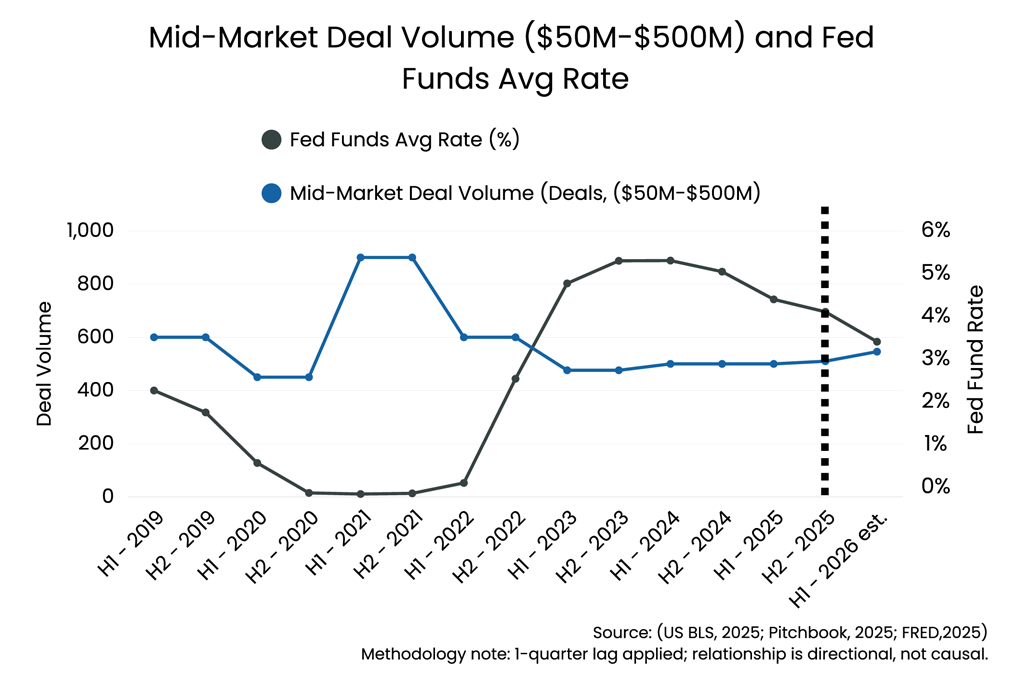 |
The takeaway is not that “everything is for sale,” but that assets with clarity of earnings, defensible market positions, and clean financial narratives are commanding attention. This is why the current moment matters. Capital wants to move, but only where risk is understood, and execution feels credible. |
Regulatory and antitrust risk has become an important execution variable
|
If capital availability explains why deals are possible, regulation increasingly explains whether they close on time, or at all. In the US, heightened antitrust enforcement, greater coordination between federal and state authorities, and a broader interpretation of national security concerns have made regulatory strategy a core part of deal planning. Transactions that once sailed through now require careful sequencing, extended timelines, and in some cases, structural remedies. In the UK, the National Security and Investment regime and the evolving stance of the Competition and Markets Authority are having a similar effect. Even mid-market deals can trigger reviews that materially affect certainty and timing.
“Regulatory probability, not just valuation, now shapes deal economics.”
|
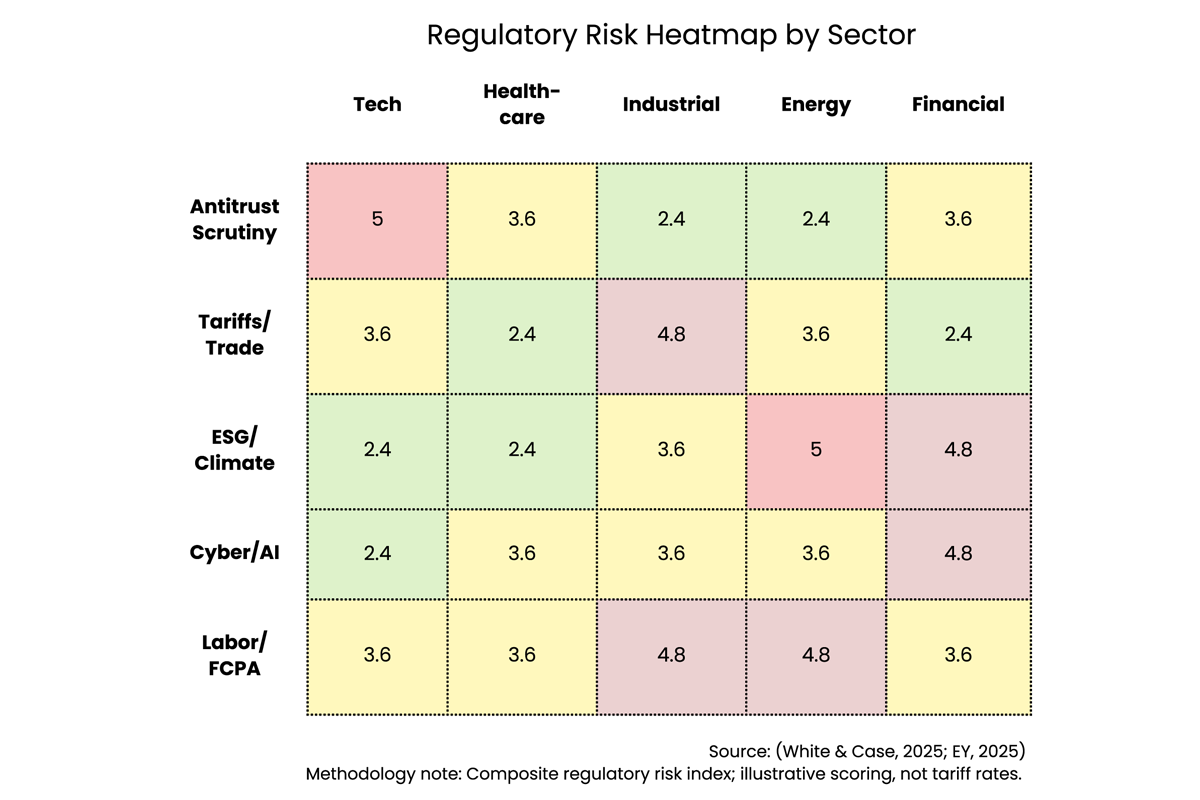 |
The practical implication is straightforward but often underestimated: regulatory risk must be priced, planned for, and managed from day one. This affects everything from valuation models and long-stop dates to conditionality and walk-away rights. For cross-border transactions, it also means anticipating overlapping review processes and preparing mitigation strategies early. Executives and advisors who treat regulation as a late-stage hurdle are finding themselves exposed. Those who integrate it into the commercial and structural logic of a deal are far better positioned to preserve value and momentum.
|
 |
Valuation repricing and the rise of contingent consideration
|
Across both regions, valuation remains one of the most sensitive aspects of dealmaking. The gap between seller expectations and buyer underwriting has not disappeared. Instead, it has been reshaped. Rather than forcing immediate convergence on headline multiples, many transactions are now structured to share risk over time. Earnouts, deferred consideration, and minority rollovers have moved from being occasional tools to standard features of mid-market deals. “Headline price matters less than how value is realized over time.” For sellers, this reflects a growing focus on net proceeds and certainty. Tax changes, higher operating costs, and a more complex policy environment mean that after-tax outcomes often matter more than nominal valuations. Well-designed contingent structures can protect upside while enabling transactions to move forward. For buyers, contingent consideration provides a mechanism to manage uncertainty and align incentives, but it also introduces complexity. Earnout metrics must be precise, governance must be robust, and diligence must extend beyond historical performance to the practical realities of post-close measurement. The key point is that valuation in 2026 is as much about structure as it is about price. Understanding the technical, tax, and behavioral implications of these mechanisms is essential for both sides of the table. If you’re looking for assistance in this regard, be sure to get in touch with the team here at bizval. We’re ready and available to assist.
|
 |
What this means in practice
|
Taken together, these themes point to a more sophisticated M&A environment. Capital is available but selective. Regulation is influential but navigable. Valuation gaps are real but bridgeable. Success in this landscape depends on preparation. Businesses that can articulate a clear equity story, anticipate regulatory scrutiny, and engage constructively on structure will be best positioned to attract high-quality buyers and close on favorable terms. Buyers who move early on financing, diligence, and regulatory planning will continue to win competitive processes.
|
|
|
Read the full reports
|
With contributions from Ryan Yergensen (Greenberg Traurig), Danielle Patterson (Family Office Access), Nick Bradley (High Value Exit), Linglan Wang (Gartner), Mason Moick (JP Jenkins), and Nigel Jackson (McFaddens LLP and Karam Missick & Traube LLP).
|
US Report - Dry Powder and Discipline: M&A Reset in a Moderately Elevated Rate Environment
Our US report explores how capital availability, private credit dynamics, and regulatory scrutiny are shaping deal activity across key sectors. It provides a practical framework for understanding where opportunity lies and what buyers and sellers must do to execute with confidence in 2026.
|
| Download US Report |
UK Report - Repricing the Cycle: UK Mid-Market M&A Through Tax, Policy, and Private Capital Lenses
The UK report focuses on how tax changes, regulatory considerations, and evolving financing structures are influencing timing, valuation, and outcomes. It offers detailed insight into contingent consideration, net proceeds analysis, and cross-border dynamics.
|
| Download UK Report |
|
|
|
|
A quick reintroduction to bizval
|
bizval exists to fix a fundamental problem in the business world: valuations are too often time-consuming, confusing, and expensive, leaving owners and advisors guessing when they need clarity most. Our mission is straightforward: deliver accurate, independent, data-driven valuations that are easy to understand, defensible when it counts, and completed faster than industry standard.
Whether you need support for a transaction, dispute resolution, tax planning, or strategic decision-making, we're designed to meet you where you are without the jargon or unnecessary complexity. At our core, we believe business owners deserve clarity, not confusion. If you’d like to explore a valuation for your business, get in touch with our team today.
|
|
|
|
|
|
|
|
|
|
|
|
|
 |
In case you missed it
|
What’s your business really worth? A live bizval valuation example on the Bulletproof Entrepreneur podcast show
In this episode, our CEO and co-founder Graham Stephen joins Alan Smith on the Bulletproof Entrepreneur podcast to walk through a live valuation of a real £10m-revenue marketing agency. Listen here.
|
|
|
Small town heart, global reach - Building Omne with Candice Mullins
In this episode, Graham speaks with Candice Mullins, co-founder and managing director of Omne, about building an accounting and advisory practice from a small Eastern Cape town that serves clients across South Africa and internationally. Listen here.
|
 |
The Built-to-Exit programme
|
We're excited to announce that we have partnered with AJM to launch a structured programme for shareholders who want to build businesses that are ready for sale, succession, or investment. This isn't about rushing to exit. It's about creating the kind of business that gives you options when the time comes.
AJM brings over 20 years of experience in tax optimization, structuring, and compliance for mid-market firms. Combined with bizval's valuation expertise, this collaboration is designed to help owners eliminate deal breakers, strengthen value drivers, and position their businesses with confidence.
If you're thinking about your next chapter, or just want to build something more valuable, reach out to us for more insights into the new program.
Until next time,
The bizval team
|
|
|
|
|
|