|
|
What your valuation says should depend on who’s reading it |
|
Picture this. A business is valued at a solid, defensible number arrived at through rigorous methodology. Within twelve months, that same figure is examined by a tax authority, presented in divorce proceedings, relied upon in a shareholder dispute, and scrutinised by a buyer's legal team. As you might imagine, the exact same number leads to four entirely different conversations. Each of those audiences walks into the room with different instincts, different fears, and a different definition of what 'right' looks like. And managing these nuances is a challenge that lies at the heart of professional valuation work, but rarely gets spoken about because we’re so quick to focus on the number itself. In this month’s newsletter, we want to talk about how the audience impacts how valuations should be framed and presented. |
Staying true to our principles
|
 |
Before we discuss what changes with different stakeholders, lets identify what has to stay the same. Independence and methodology are not variables - they are the foundation on which we run our business here at bizval. The number is arrived at the same way regardless of who commissioned the report, what outcome the client might prefer, or how contentious the context. And this is because the defensibility of a valuation depends entirely on the integrity of that foundation. As cliché as it might sound, we’re selling credibility as much as we’re selling the actual valuation itself. A valuation that appears to bend toward a favourable outcome is a valuation that fails under scrutiny, and that’s where deals often fail if a company is playing loosely with reality. Once we’ve arrived at a valuation we can stand behind (both in terms of the data and our professional judgment), then we can start to look at how that number is communicated. We can look at the emphasis, framing, and depth of explanation given to certain assumptions. But what never changes are the principles and methodology on which our valuations are built.
|
The stakeholders who will challenge the number
|
 |
Now, let’s look into how different audiences will shape how valuations are communicated and presented. This is not an exhaustive list but it will give you a sense of how a skilled valuations professional anticipates the interests and incentives of each stakeholder, in order to pre-empt the common objections and concerns:
Tax authorities. Their first question is almost always: is this aggressive? Revenue authorities approach valuations with professional suspicion. They are looking for inconsistencies between the methodology and the outcome, and they will scrutinize comparable selection, earnings normalization, and discount rate assumptions with particular care.
Valuation reports here benefit from a conservative tone and exhaustive methodology notes so that the authorities can see the reasoning laid bare. Simply put, an assumption that goes unexplained in a commercial context becomes a red flag in an audit. Courts. Litigation is a different environment entirely. Here, the question isn't just whether the number is right, it's whether the expert who produced it is defensible under cross-examination. Courts want neutrality. They want clearly stated assumptions, explicit acknowledgment of uncertainty, and language that doesn’t advocate for one side or another. The moment a valuation report reads as though it's arguing a position rather than reporting a finding, opposing counsel will make that its centrepiece.
Often this can mean softening your position somewhat and steel-manning the other side to demonstrate credibility and humility in the face of challenge. Regulators. Regulatory reviews are fundamentally about process. These stakeholders want to know that the valuation was produced through a documented, auditable methodology that aligns with the applicable framework. Essentially, you need a bulletproof audit trail. What reads as unnecessary formality in a commercial transaction reads as competence in a compliance review. Disgruntled shareholders. As you’ll undoubtedly know, shareholder disputes carry emotional weight that other contexts simply don't. A minority shareholder challenging a buyout believes, at some level, that they've been treated unfairly. And they are digging to understand how. A report prepared for this context needs to address minority interest treatment explicitly and transparently, and the inputs need to be visible. The more opaque your valuation is, the more suspicious they become.
If you can provide a report that addresses these concerns directly (often before they're actually raised) it can change the whole atmosphere of the dispute. Divorcing spouses. This happens more than you would think and the key question being asked is always: am I being shortchanged? In family law contexts, one party often has far less familiarity with the business than the other, and that asymmetry breeds distrust. You’re aiming for a report that explains the methodology in plain terms, that accounts for asset inclusion comprehensively, and that doesn't assume financial literacy in its reader
Achieve that, and you’ve won half the battle before the lawyers even start talking. Buyers and sellers. Commercial contexts require commercial language. A buyer's legal team and a seller's advisors are not looking for academic rigour - they're looking for a number they can take to the table and defend. Deal-relevant multiples, balanced forward-looking assumptions, and an understanding of how the valuation sits within the commercial context of the transaction are what matter here. The report needs to understand the deal, not just the business. As you can see, this is much more of an art than a science, and it requires a certain level of psychological and emotional fluency to navigate these conversations well. Your maths can be perfect, but if you aren’t able to deliver that valuation in a compelling way that allays the concerns of the people you’re talking to, then all that work is in vain. This dichotomy between the theory and the practice is what makes this work so endlessly fascinating for us, and it is often why our clients work with us in the first place. |
Why this matters to the advisor
|
 |
If you're an accountant, broker, lawyer, or wealth manager who deploys valuations on behalf of clients, the quality of the report reflects on you. A valuation that is technically sound but poorly calibrated for its audience creates unnecessary friction. And in worst-case scenarios, it stalls transactions, escalates disputes, and invites audits. The gold standard is a solid foundation that doesn’t move and calibrated delivery that understands the nuances of each conversation. This is what it means to provide professional valuation services, and it’s one of the core insights that bizval is built on. Everyone is focused on answering the question “is the number right?”, but there are other questions that are just as important to answer before a report is finalised: Who will read this? What will they push on? Does this report survive that room?
|
The number is only the beginning
|
 |
This is the sort of lesson that we hope to teach our clients before they learn it in practice: a well-constructed valuation anticipates the next five questions and the room they'll be asked in. Whether that room is a tax audit, a courtroom, a boardroom, or a family law hearing, the report should be ready for it. If you have a client facing any of these situations (or if you’re facing it yourself), it's worth having a conversation now about how the valuation will need to be framed, not just what it will say. Because the number is only the beginning. How it's heard is everything.
|
|
|
Recent podcasts
|
|
|
 |
Q1 2026 Economic & M&A Update - What it means for valuations & deals
Kyle McCulloch walks through bizval’s Q1 2026 US M&A Report and what’s actually happening in the market - how valuations are being set, how deals are being financed, and why many owners misunderstand both. Ryan Tansom, founder of Independence by Design and Kyle talk about why multiples are a blunt instrument, why discounted cash flow is the real anchor, and how shifts in debt markets are changing cash-at-close outcomes. Listen Here.
|
|
|
Fractional leadership & scaling South African mid-market businesses with Grant
In this episode of the bizval podcast, Graham Stephen sits down with Grant Webster, founder of Gralen Consulting and Fractionation, to explore what really happens inside growing South African businesses when momentum outpaces structure. Listen Here.
|
|
|
How clear messaging drives growth and scalability with Garth
Graham Stephen speaks to Garth Jemmett - founder of We Explain Stuff about one of the most underestimated drivers of value creation: clarity. Many businesses struggle to scale - not because of a lack of opportunity, but because of an inability to clearly articulate what they do and why it matters. Without clarity, teams lose alignment, customers hesitate, and growth slows. Listen Here.
|
|
|
The value of peer boards in leadership decision making with Eduan
Eduan Steynberg, a chartered accountant, former wine industry executive, and the Western Cape owner of The Alternative Board. In this discussion Graham and Eduan explore the transition many leaders face - moving from being deeply embedded in operations to stepping back as an advisor, decision-maker, and value creator. Listen Here.
|
|
|
 |
Business Builders Blueprint Diagnostic
|
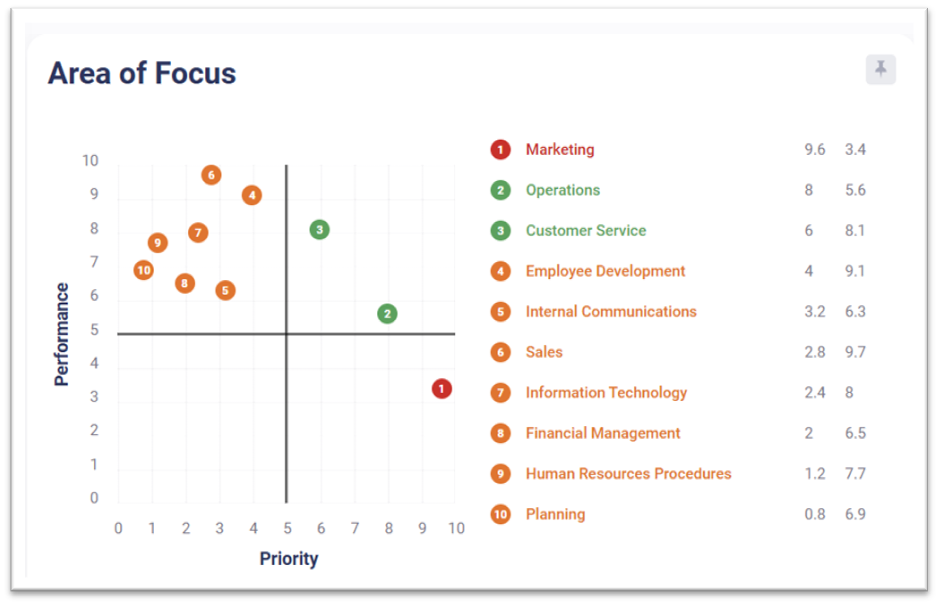
Get a FREE clear and honest view of your business with the Business Builders Blueprint Diagnostic (your “MRI scan”), supported by The Alternative Board.
This is not a quick checklist but a structured in-depth diagnostic designed to uncover exactly where your business is strong and where opportunities exist. You can choose to complete an initial onboarding diagnostic or the full assessment - with the full version unlocking a powerful “Area of Focus” report like the one above. The real value lies in identifying the low-hanging fruit - the practical areas you can act on immediately to improve performance and increase business value. To get started, please contact Chrishenda Brukman with your name, surname, company name, telephone number, email address, and a short description of your industry. You will then be registered on the system and receive your login details to begin. |
Steer Your Business features bizval
|
 |
"My Business Partner Died. It Nearly Destroyed everything we built.”
This is a real story from South London. And it should serve as a wake-up call for every
business owner reading this. Read the full story here.
|
 |
Virtual Event: Why Valuation Matters Even If You Don't Plan to Sell
Thursday, April 9, 2026 from 12:00 - 1:00 PM ET
Most founders think valuation only matters when they are preparing for an exit. It doesn’t. Valuation influences succession planning, ESOP design, governance decisions, shareholder agreements, risk protection and long-term legacy. For purpose-driven businesses, understanding value is not about selling - it is about stewardship.
Join Graham Stephen, for a practical and educational session with Small Giants Community.
What to Expect |
The fundamentals of business valuation What actually drives value in founder-led businesses Why valuation matters even when you are not selling Implications for legacy, ESOPs and succession planning Practical real-world use cases |
No hype. No exit pressure. Just structured insight. |
By the end of the session, you will: |
Understand what your valuation really reflects Identify the key drivers of value in your business Recognise how valuation supports governance and stewardship See how clarity around value reduces future conflict and risk. |
| Register Now |
Winning the Away Game: Why bizval exists
|
 |
Designing businesses that are built to last
A valuation is less a once-off event, and more a regular check-in on whether your business can stand on its own. For Graham Stephen, the idea of value was shaped long before spreadsheets, models, or boardrooms entered the picture. It was forged at home, in Port Elizabeth (now Gqerberha), watching a system fail someone he loved.
Read the full story here. Until next time, The bizval team |
|
|
|
|
|