
Source: US M&A Report
Engagement Overview
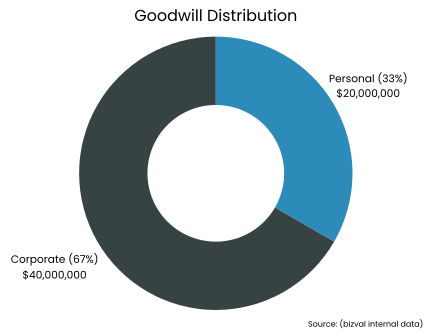
In October 2025, our valuation team was engaged by instructing attorneys on behalf of the shareholders of a privately held insurance company. The company was being integrated into a larger insurance group through a roll-up transaction. Given the highly relationship-driven nature of the business, there was a need to differentiate between personal goodwill associated with key individuals and corporate goodwill inherent to the enterprise. An independent, defensible valuation was required to quantify this allocation for tax and transaction purposes.
Key Challenges
Distinguishing personal from corporate goodwill demands a rigorous, evidence-based approach that can withstand scrutiny from tax authorities. Key considerations included demonstrating the extent to which enterprise value depends on the continued involvement of specific individuals, aligning the methodology with established case law and prevailing tax guidance, and ensuring the allocation reflects commercial reality while remaining proportionate to the underlying revenue and profit drivers.
Our Approach
A range of established methodologies was evaluated. Given the straightforward business model and traceable income streams, the with-and-without method was selected. Steps included constructing baseline DCF valuations, modelling scenarios without key individuals, quantifying reductions in enterprise value, and attributing residual value to corporate goodwill, supported by sensitivity testing and benchmarking.
Value Delivered
Our valuation provided a clear, scenario-based rationale for the allocation between personal and corporate goodwill. This supported a meaningful reduction in personal tax exposure while maintaining a robust position under tax authority review. The transparent methodology enhanced stakeholder confidence and facilitated smooth transaction execution.